Kim and Trump and fire and brimstone

North Korean military doctrine is essentially that of the Soviets of World War 2. The Red Army in that war used artillery like no one else…they’d quietly mass batteries and mobile rocket launchers in numbers not seen anywhere else in WW2 and unleash sudden and astonishingly violent barrages that would stun those under them and pretty much annihilate anything left in the open. They could do this along fronts hundreds of miles wide. There was a German general named Heinrici who became brilliant at guessing just when one of the barrages was imminent and would withdraw his army to a secondary line so that all of the barrage’s violence would fall on empty trenches. But that is not an option the South Koreans have at the moment, since the North Koreans have all their artillery trained on Seoul.

It’s a lot of artillery, too, hundreds if not thousands of very large caliber guns, dug into deeply fortified batteries–a Japanese specialty in WW2, that one, and probably also studied by the North Koreans–and each fortified battery would probably require bunker busting bombs to destroy them. My concern is that if North Korea were to respond to any US attack by opening up on Seoul as they have been promising for decades–it’s their variety of Mutually Assured Destruction (M.A.D.), you attack us, we destroy Seoul–that the bombardment will be massive and incredibly violent in a way that only those who have been subjected to one would appreciate. Which limits those who have subjected to one to Germans and their Eastern Front allies, or the Japanese in Manchuria in 1945, and all them are long dead and not being interviewed on the news.

Which means that the Mutually Assured Destruction value of having hundreds or very large cannon and rocket launchers trained on the city of Seoul doesn’t really hold if people in charge on the other side cannot fathom just how incredibly destructive an old fashioned WW2 style Red Army artillery bombardment could be. We don’t have those in war anymore. For one thing, armies are much smaller now, and battlefields ar smaller, and wars much smaller. Wars aren’t even as big as they were a generation ago. In fact what makes the Syria War so destructive despite the relatively small numbers of combatants involved (maybe half a million of all sorts from regulars to occasional militia; the Iran-Iraq War involved two million full time soldiers) is the combination of a Syrian military completely steeped in classic Soviet military doctrine–hence the destructive overkill–assisted by the Russians themselves, doing to Aleppo what they did to Grozny. Not that this should have been unexpected. Back in the 1980’s the Muslim Brotherhood in the Syrian city of Hama rebelled, and Assad’s dictator father Hafez Assad (imagine a meaner Bashar Assad) ringed the city with hundreds of the heavy artillery batteries the Soviets has given him to fight Israel and pounded it into submission for a solid month with a violence that surpassed even Aleppo, which, after all, took years to obtain the same result. (They also leveled buildings with tanks, and filled the sewers with diesel and set them aflame.) Even quashing a rebellion was sometimes done in much bigger ways a generation ago.

But we think smaller now. The US drops a non-nuclear bomb a zillionth the size of the bomb that flattened Hiroshima and social media is in hysterics thinking the end of the world is upon us. This was one big scary bomb, but not an atomic bomb. A hundred years ago they dug mines under the opposing trenches and filled them with TNT and blew enormous holes in the ground with vastly more explosive power than in Mother of All Bombs. And Britain’s giant Grand Slam bomb in WW2 might have been even heavier than the MOAB (they used it to punch holes in the twenty foot thick concrete ceilings of u-boat pens, and the explosions were so powerful it would disturb the ground underneath as well, weakening the foundations. And this was in 1945.) When we obsess and fantasize about a not exactly high tech bomb–it’s not a smart bomb, even, and the Russians have a bomb that is technologically simpler (using the air itself as explosive fuel, a technology invented by the Luftwaffe) and yet four times as powerful–we forget just how destructive an old fashioned massed artillery barrage can be. Just a bunch of big cannons that can fire a shell thirty or forty miles, and have it land within the city of Seoul, population ten million. Add in short range rocket launchers that can be fired from further distances. Admittedly Seoul’s distance from the DMZ is about the limit for heavy artillery and rocket launchers (so the north end of the city will take much more of a beating than the southern end) and we can assume that North Korea has to have their batteries closely packed together within range. So it’s not like they have all of their estimated 8,500 cannons and 5,000 mobile rocket launchers aimed on the South Korean capital. But they have a lot of them there. Yet even if the North Koreans have only 500 guns within range and they only manage twenty rounds each–an hour’s work–before being blown up themselves, that is ten thousand very large high explosive artillery shells landing on Seoul. Which is about the equivalent of a good sized bombing raid in WW2. Or a bombing raid on Pyongyang in the Korean War, for that matter, bombing raids we’ve forgotten about, but the North Koreans haven’t.

The most optimistic estimates, the ones who believe North Korea’s vaunted artillery potential is mostly bluff, say the number of shells landing on Seoul would only be in the high hundreds. Apparently that’s a good thing, only several hundred. The North Koreans themselves promise a rain of fire and brimstone (Kim Il Sung invented brimstone) and the most paranoid of disinterested estimations see hundreds of thousand of shells falling. We can safely say it will be somewhere between several hundred and several thousand shells falling on Seoul, possibly as early as this weekend if Trump is as mad as he likes to pretend he is. I say that given that the North Koreans learned the art of war, as they used to call it, from the military academy in Moscow (Kim Il Sung, like Ho Chi Minh and many of Mao’s generals, was trained there) I think it might be on the safe side to assume that the North Koreans could potentially lay down one hell of an old fashioned long distance heavy artillery barrage on Seoul, like the one the Russians unleashed on Berlin in 1945. And it’s also safe to say that there is nothing the South Koreans can do about it, if Trump really wants to nail Kim Jong-un. Because right now the fate of Seoul is in the hands of Donald Trump and Kim Jong-un. And you think you are having a bad day.
Left and Right versus the press

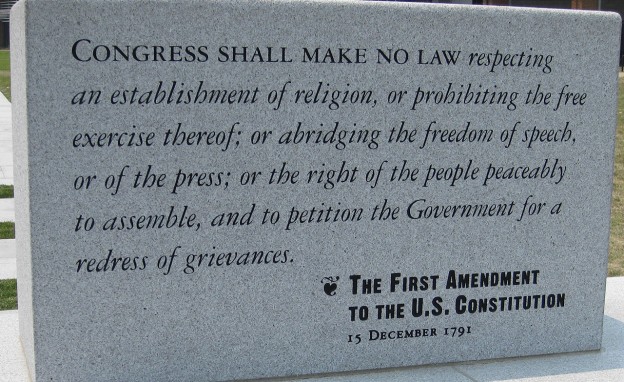
It wasn’t so long ago that Bernie Sanders supporters hated the press, and Bernie held events that the press was barred from. Much of Bernie’s own stump speech railed against the media. He wanted reform. His first big event after conceding a discussion of how to change the nature of mass media in America. He said instead of a media like we have now–which he insisted was entirely corporate, all of it–we need to have a network run by the Democratic Party to promote a progressive agenda. He wanted a progressive Fox News. Trump wanted, and got, Breitbart. Both Bernie and Trump ran against the media. It’s just that Trump was elected. What you are seeing now is what happens when a campaign that ran on an anti-media platform wins the presidency. The antipathy toward the press in America is equally strong on both ends of the political spectrum. Most people prefer to read or hear only what they agree with, a tendency that has been reinforced by Facebook, where people do not like to see opinions they don’t agree with. Probably at least half the population of the U.S., perhaps a lot more, would support some sort of restrictions on the freedom of the press in this country. It’s just that since Trump is the one in the White House, progressives suddenly love the independent press again. But that creepy totalitarian streak when it comes to the news is not far beneath the American surface, and should another progressive candidate with so little regard for a free media come along like Bernie Sanders (left over from his hard left days, where Marxists cannot abide a free press), then you could have both Democrats and Republicans running against the media, and our tradition of a free press could be in serious jeopardy. Of course, that is a tradition that neither Trump and the alt-right nor most Progressives are particularly attached to.

I think when it comes to Donald Trump on the media, the progressives of America are looking at a hideous, distorted funhouse mirror reflection of their own attitudes toward the media and the First Amendment not too long ago.

first_amendment2_featured-624x382

What did the president know and when did he know it?

The reporting in the Washington Post makes clear that both Trump AND Pence have been aware that Flynn had been compromised by Russian intelligence, and have been aware for some time. We are not sure now how all the investigating into this will go. The press will be focusing on this with extraordinary intensity and with a White House that leaks like no other….and will now begin gushing like the Oroville Dam. Congressional investigations are inevitable. A special prosecutor seems at some point to be likely. And the FBI and CIA and several other agencies have been investigating as well, indeed, Flynn’s resignation seems to be the result of those investigations. And should both Trump and Pence be found to have been party to a conspiracy to hide the fact that Flynn had been potentially turned by Putin, then both Trump and Pence could be forced to resign. None of this is likely, but it is well within the realm of the possible without resorting to paranoid conspiracy thinking. In which case, unless Pence were to go first and a replacement chosen by Trump before Trump resigned, Paul Ryan, as Speaker of the House, will be president. People are no doubt talking to Ryan about this right now, telling him he has to be ready because there is an outside chance that he will constitutionally required to take the path of president. And that is how weird this is getting, and getting there so fast. Because we simply do not know. How much did the president know, I have heard asked several times on television tonight, and when did he know it. If you are old enough to remember the Watergate hearings, Senator Howard Baker’s double question to John Dean will send chills down your spine. It seems so impossibly unlikely that any of this could happen, but then Watergate began as an odd little burglary, and this seems to be so much more.

Stephen Miller

Apparently the only reason Trump lost in Nevada was that the entire population of California, every one of them an illegal alien, pulled up in old people buses to gamble and bingo and drink and vote for Hillary. They then took way too long picking out what to eat at the buffet before piling back on the bus back to Cathedral City. You can talk to anybody, they will tell you.

They also took all the ashtrays.

stephen-miller

White House senior policy advisor Stephen Miller, really, just ask anybody.


Sorry people, but 2018 will likely not be a very good year for Democrats.

I can tell you all right now that unless there is an economic disaster and medical insurance catastrophe, 2018 might not be a very good year for Democrats. We are highly unlikely to win the Senate–indeed, we are likely to wind up with fewer Democratic senators than we have now–and the House might be a wash, maybe a few more Democrats or a few more Republicans, but we will not take the House. We might well expand our governorships, and maybe regain some of the legislative seats we lost last year (I believe we lost a thousand seats across the fifty states, an absolute calamity that few Democratic voters are even aware of). Perhaps if some vast and horrible scandal overtakes Trump then things could be different. Barring that, given how Trump’s supporters are spread across lots and lots of rural and small town America while Democrats are crammed into urban and suburban districts mostly on the coasts, there will be more districts with a Trump majority than with anti-Trump majorities. Rural voters are over represented as rural districts have smaller average populations than urban districts. And of course as far as the Senate goes, small states have the same number of seats as big states. So we will at best chip away at the GOP majority in the House, but in the Senate, 2018 is the year of the rural voter. And as Millennials move to where the jobs are, in the big city megalopolises found mostly along the coasts, the average age in these rural parts keeps aging, and older voters–us baby boomers–just adore Donald Trump. Only a third of the senate is up for grabs, but alas most of the states in 2018 are in those aging rural and small town states where Trump did really well. That’s just the way it rolls. This mess is unlikely to end until 2020, provided we don’t mess that up again. It might not end until 2024, by which time a whole lot of baby boomers will have died off and Millennials will be hitting that age when people finally start to vote regularly. Some candidate who probably none of us have heard of now and is thoroughly progressive will win that year, and our long national nightmare will be over. I’ll be 67.

The source of Trump’s power

I think many of us–maybe most of us–have forgotten that Betsy Devos’ purpose is to essentially shut down the Dept of Education. She wasn’t brought in to run the place but to dismantle it; not to support public education but to begin its replacement by private education. And she could be very good at this sort of thing. It would be like putting a hardcore pacifist–Father Philip Berrigan, say–in charge of the Defense Department. The goal would be to reduce the department and its policies to the lowest, least intrusive level possible. You have to understand that. That’s why, to her partisans, all the objections to her lack of expertise were completely irrelevant. Because hopefully there will not be much of a department left to run anyway.

The same thing with the head of the EPA. And HHS. They don’t need to know how to maintain, all they need to do is tear down. This is revolution. It’s not reaction. It’s revolution. We are the counter-revolution. This is as deep and fundamental a struggle as there has been in this country, as profound as the change brought about by the Reagan Revolution and the New Deal. The thing was, both FDR and Reagan swept the electorate and Congress in mighty waves. Trump won with three million fewer votes than the loser, and holds a small lead in Congress. His power now is based almost completely on the terror among establishment Republicans of the hold that Trump has on his base. And that base includes most–perhaps two thirds or more–of the Republican party. That is, when Republicans face their primary voters, they will be looking at almost all hardcore Trump supporters. And if Republicans in the House turn against Trump, it is assumed that they will be swept away in the primary by rabidly pro-Trump voters who throw all their support to a pro-Trump challenger who will be backed to the hilt by a vengeful Donald Trump.

Just about every single Republican member of the House faces this problem. Only a third of the Senate does (only a third of the Senate’s six year terms are up for election every two years), though all but one of the eight GOP Senate seats coming up in 2018 are in states that Trump won strongly (Nevada being the exception.) It is this, and only this, that keeps the entirety of the House GOP and all but a few of the Senate GOP licking Trump’s boots every day, no matter what he says. And it is this, and only this, that is Trump’s source of political power right now. But as long as Trump holds the GOP in congress by the short hairs like this, just about every outrageous cabinet pick and every executive order and every crazy tweet and every idiotic foreign policy stumble will be supported by this Republican Congress. And unless Trump’s base cracks–and there’s nothing saying even blatantly treasonous revelations about he and Putin could shake their frightening devotion–Trump will still maintain this hold on his party. This is why he seems to play to his base only. His devoted followers represent maybe a third of the electorate, but they are eighty or ninety per cent of those who vote in Republican primaries. And that is all Trump needs to carry out his revolution. Successful revolutionaries are rarely popular with everybody. But they know who in power to shoot to get their way. Of course, unlike Steve Bannon’s role model Lenin, Trump can’t actually execute anyone. But he can tweet with deadly accuracy. The first Republican congressman who gets out of line will find that out.

To the victor goes the spoils

What struck me about Trump’s insane notion that we will take Iraq’s oil–to the victors belong the spoils, he said–is that the US doesn’t need that oil. We import only 35% of our oil now, and less than 20% of our imports come from the middle east, and number that keeps falling. The other 80% comes from the western hemisphere–Canada, mostly, but also Mexico and Venezuela and I think Colombia. So this Iraqi oil would be exported to other countries–Europe, Asia–and would need massive infrastructure investment after a decade and a half of war. It would also require the permanent presence of US troops to protect it from angry Iraqis. This is sort of a throwback to the way Europe, America and Japan divided up chunks of pre-WW2 China into economic zones, administered by each country and protected by their own troops, while not actually taking possession. Any way you look at it, the idea is a net loss for the United States (not to mention Iraq) but a gain for elements of the oil industry. Exxon for instance. Meanwhile, the price of oil is dropping steadily, and Trump plans on opening up more U.S. lands for oil production, loosening regulations on fracking, and reviving the coal industry, all of which will push the price per barrel downward. Expanding alternative energies–despite Trump, who apparently doesn’t like them–are also putting increasing downward pressure on the demand for oil. And then there are higher gas mileage automobiles and the increasing popularity of electric and hybrid cars. Gas stations are closing down for a reason–people don’t need as much gas as they used to. All of which make oil from costly investments like seized Iraqi oil fields far too expensive amid the global glut of oil. Economies like Russia’s and Venezuela’s are tanking for a reason–global supply exceeds global demand. The art of the deal, I guess.

Paranoid chant

I keep thinking of Russia, of Russia….

I am thinking that at least part of the reason that senators John McCain and Lindsay Graham folded on Rex Tillerson is that without Tillerson there is no State Department presence in the White House. Foreign policy would be controlled by ultra-nationaliist Stephen Bannon, who wrote Trump’s extremist inauguration address, and National Security Adviser Mike Flynn, who is under investigation for his contacts with Russia and whom much of the intelligence community (both in the US and internationally) assume is a Russian intelligence asset. Keep in mind that both McCain and Graham, as senators, have been briefed on the investigation into Flynn and know much, much more than either the press or public. The notion that they have to approve a nominee for secretary of state who is also close to Vladimir Putin must turn their stomachs, but intelligence probably shows that, unlike Flynn, there is no evidence that Tillerson is actively colluding with the Russian government. And Tillerson, at least, judging by his answers to the senators during his hearing, might provide a moderating hand. Right now we look to a general named Mad Dog Mattis, as secretary of defense, to be the sole moderating force in the Trump administration’s foreign policy.

Empty bleachers

The pictures like this from the inaugural parade are nuts, as those are the bleachers that were around the Presidential viewing stand. Obviously these seats were to be distributed by the Trump transition team, and obviously nobody bothered. It is a stunning display of organizational incompetence. Who was in charge of this? And what are they doing now, that Trump is president? Are they in the West Wing? Do they have a portfolio? Are they anywhere near the nuclear codes? I heard that the Trump people refused to use any of the professionals who organize these events every four years. You can tell.

empty-bleachers-1